

Market Update – May 2025
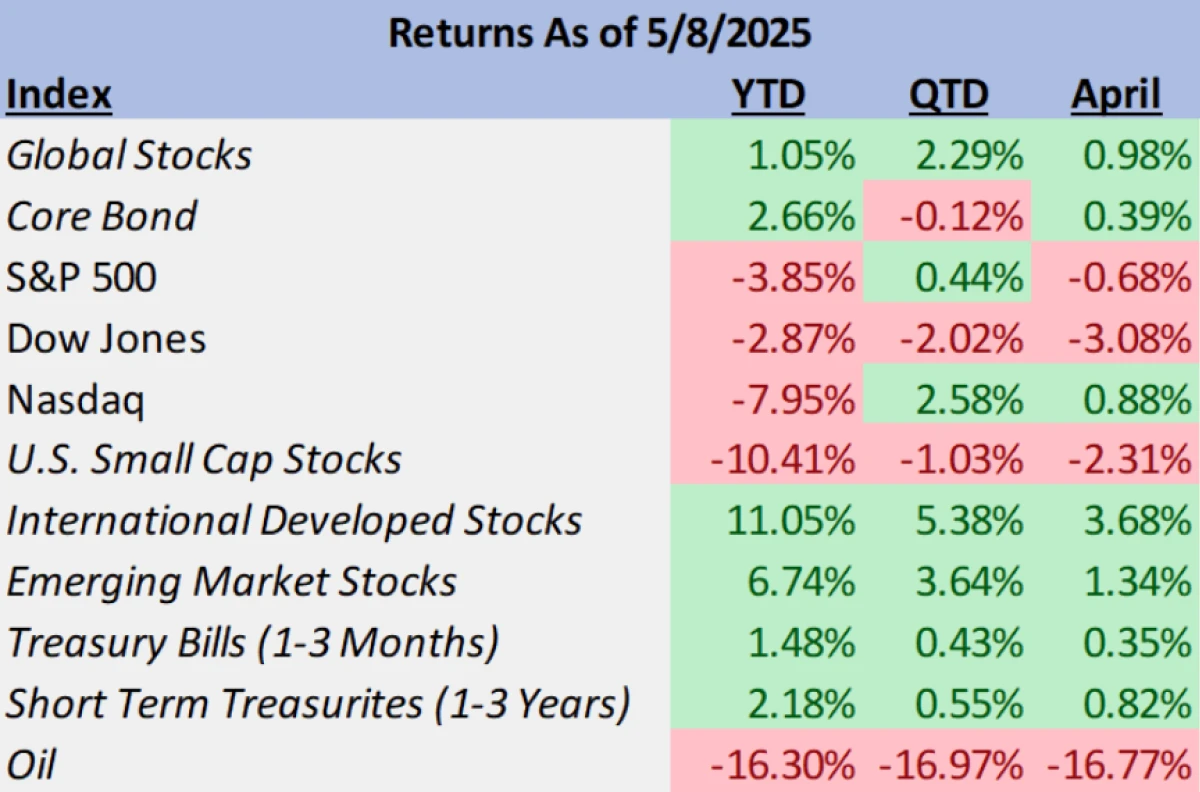
April was a volatile month for financial markets, marked by sharp swings in sentiment and asset prices. Early in April, global equities sold off steeply amid escalations in trade tensions as the S&P 500 plunged over 10% in just two days following the surprise U.S. tariff “Liberation Day” announcement. In a fashion emblematic of an event driven selloff, the same index saw an equally explosive rally with a 10% single day rise following the Trump administration’s April 9th decision of a 90-day pause on “reciprocal” tariffs (the 10% baseline tariffs remaining in effect). This wide-ranging roundtrip in stocks saw the S&P 500 close April just under a percent off its monthly start, with the index now back above its pre-Liberation Day levels.
As the days continue to converge towards the July 31st deadline when the additional tariffs are set to be implemented, the ongoing trade negotiations are being intensely monitored with heightened uncertainty over the current and potential impacts on economic health. Uncertainty also exists in the interpretation of recent important economic data (including GDP, labor, inflation reports, and sentiment), as the impacts of both tariffs directly and tariff anticipation bring to question the predictive power of the latest reports. Meanwhile, the Q1 earnings season has been better than expected, providing a silver lining. Despite the challenging backdrop, a majority of companies beat expectations for the quarter, and aggregate earnings growth turned out quite robust (as detailed later). However, management commentary often struck a cautious tone, especially among manufacturers and retailers, with many citing tariffs and supply chain issues as reasons to trim forecasts or hedge their outlooks.
As we enter the middle of May, the technical backdrop illustrates a market environment that has significantly improved since the peak of April’s volatility but could still use further repair. After spiking to 52 on April 8th, The VIX volatility index has fallen precipitously back below 20, exhibiting a moderation in intraday stock movements. The volatility gauge still remains above the lower levels to start the year.
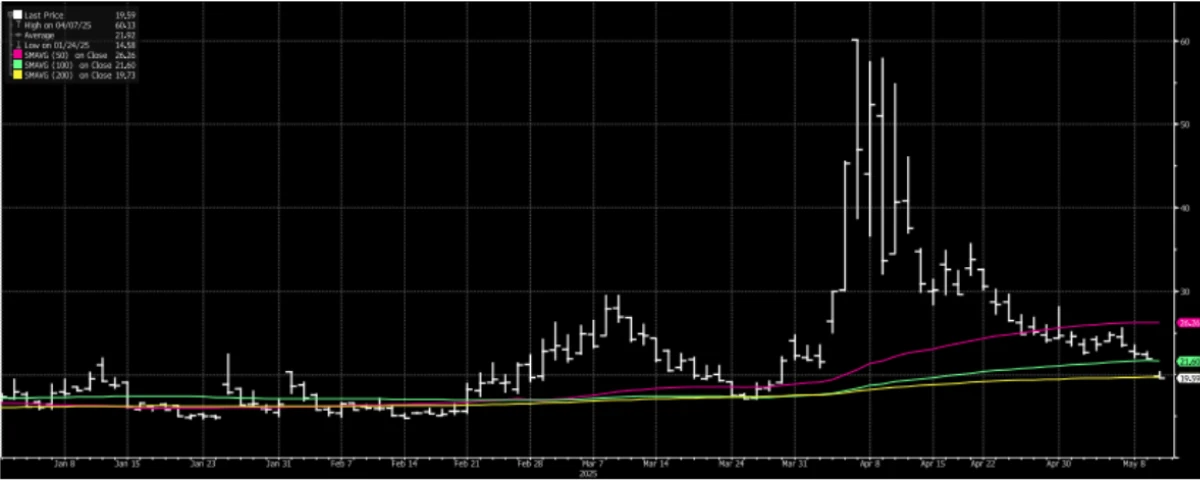
Price of CBOE Volatility Index (VIX) through (5/12/2025)
Source: Bloomberg
As mentioned in our introduction, the S&P 500 has erased its post-Liberation Day losses, having risen nearly 14% from the April 8th closing lows. The large cap U.S. stock index has erased much of its losses on a year-to-date basis (-3.35% as of 5/9, and could finish Monday flat to positive) but remains ~8.5% below its all-time high set in February.
On a sector level, the divergence has been notable. On a year-to-date basis, the biggest laggards have been consumer discretionary (-11.47%), information technology (-7.96%), and communication services (-4.2%). These sectors’ top constituents include those notable mega cap stocks making up the Magnificent 7, which after outperforming the broader S&P 500 in 2024 (up 48.5%) has significantly trailed the index year-to-date (-11.95%). Since the tariff pause, these sectors have bounced back in a significant way with technology (21.2%), communications services (12.02%), and consumer discretionary (14.93%) sectors, beating or keeping pace with the broader S&P 500. The Magnificent 7 has recovered 17.47% in that timeframe.
Among the year-to-date sector winners, utilities and consumer staples have stood the tallest with returns of 6.79% and 5.27% respectively. Unsurprisingly, these sectors are thought of by investors to be resilient economically and more defensive in nature. These attributes proved true when looking at their performance relative to the broader S&P 500 from its February 19th peak to the April 8th tariff pause. Consumer staples and utilities were down -7.28% and -8.29% respectively compared to the S&P 500 falling -18.75%. Since then, the rally in the market has seen a reversal in the leadership, with the S&P 500 (13.69%) outperforming consumer staples (6.64%) and utilities (9.81%).
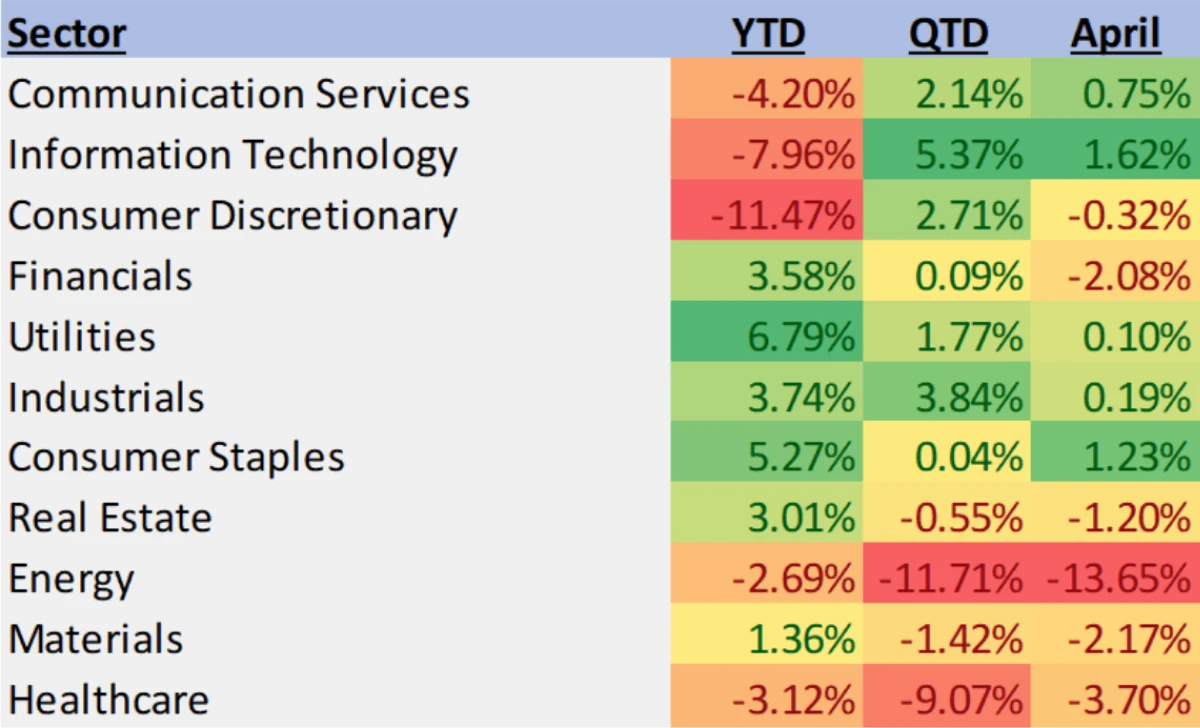
S&P 500 GICS Sector Returns Year-to-Date (through 5/9/2025)
The divergence in stocks hasn’t just been evident among sectors; the same has been seen on a regional basis as well. International developed markets (MSCI EAFE Index) have seen a strong run year-to-date (13.64%) and are trading near their all-time highs. These stocks were not immune to the year’s volatility, as the MSCI EAFE fell -13.88% from its high on March 20th to its recent low on April 7th. They have more than recovered these losses since. Helping this recent international outperformance has been a weakening of the dollar since the beginning of the year. Since peaking on January 13th, the DXY dollar index (which measures the general international value of USD) has declined nearly 8.7%. In currency markets, the weakening of one currency necessitates the relative strengthening of others.
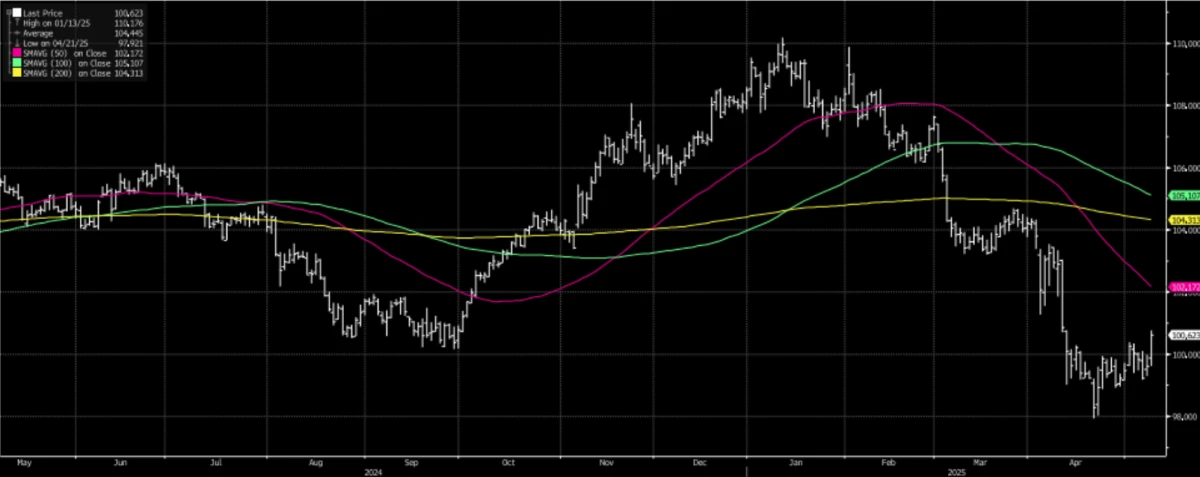
1-Year Price in DXY (Through 5/9/2025)
Source: Bloomberg
This currency movement, along with a renewed policy of higher fiscal spending in Europe and lower fundamental valuations for international stocks, can all be seen as catalysts for the recent moves. Emerging market equities have also fared well with positive returns year-to-date (6.85%). While this recent outperformance is notable, it is also important to bring this run into perspective; U.S. stocks (per S&P 500) have still significantly outperformed their international peers over longer timeframes. For instance, over the past 5 years the S&P 500 has outperformed the MSCI EAFE by 33% and the MSCI Emerging Markets index by 68.5%.
Fundamental long-term shifts in trends do happen, but it is too early to tell whether this recent outperformance will be sustained once the economic uncertainty regarding trade negotiations are resolved. Regardless, the inclusion of international equities in portfolios has been a net positive to investors as of late and should continue to provide diversification benefits.
Another important and welcome source of diversification for investors has been the bond market. The Bloomberg US Agg bond index has produced a positive return of 2.20% on the year. The 10-year Treasury yield has moved lower on the year from a high of 4.79% to 4.38% as of 5/9, while briefly breaching below 4% in April. Yields among the shortest maturity bonds have risen slightly since the beginning of the year while those in the intermediate range have fallen significantly, exemplifying the current uncertainty regarding economic growth and perhaps a potential disconnect between the Federal Reserve’s current interest rate policy and the expectation for future rates the bond market is pricing in.
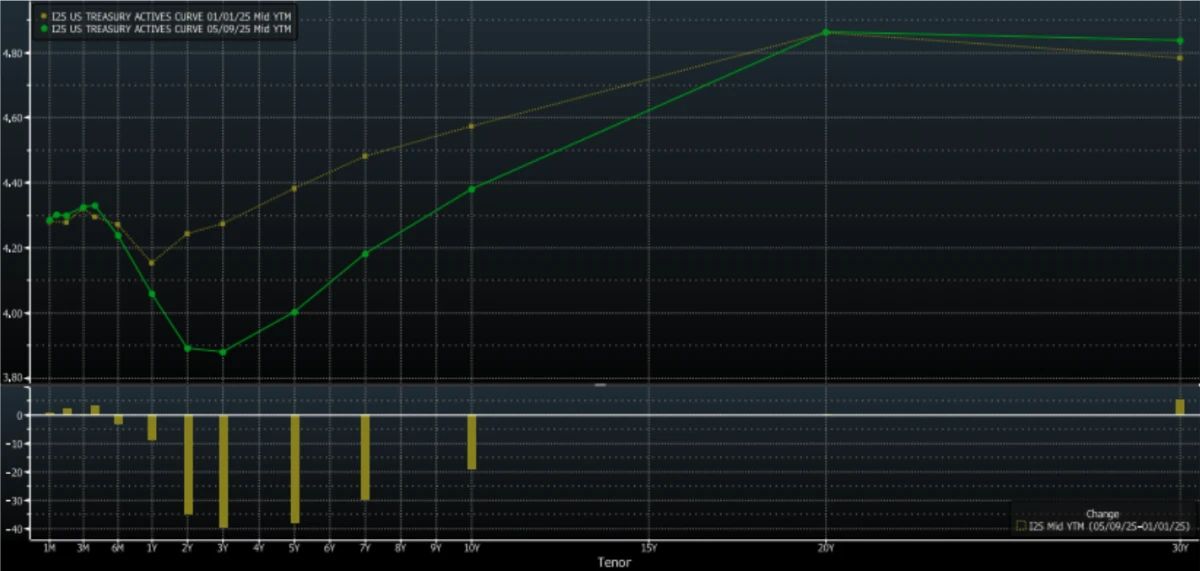
US Treasury Actives Curve (5/9/2025 compared to 1/1/2025)
Source: Bloomberg
Volatility in the bond market, while off its peak, remains high compared to recent history as demonstrated by the bond market’s version of the VIX known as the MOVE index.
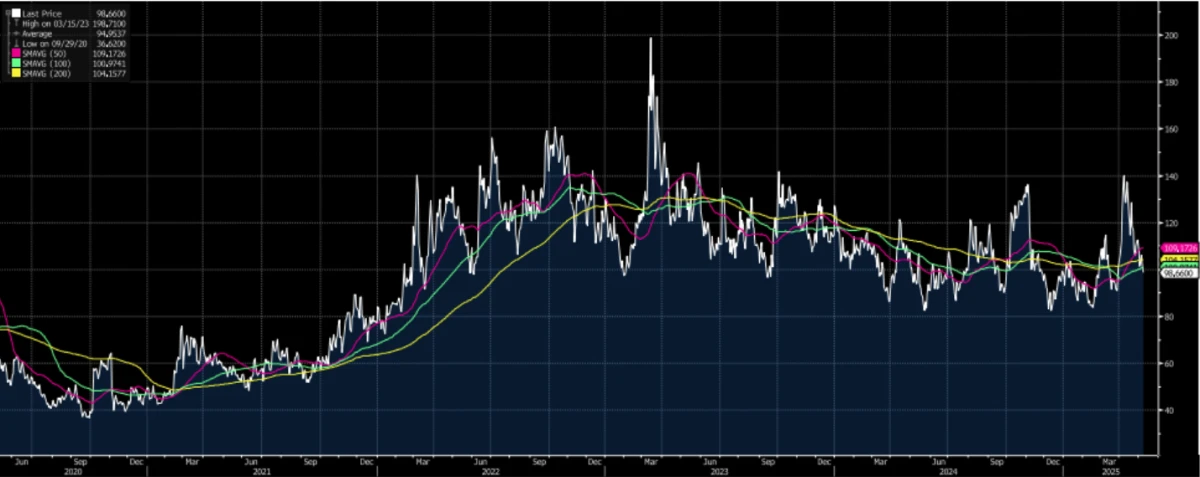
3-Year Chart in Price of MOVE Index (as of 5/9/2025)
Source: Bloomberg
Credit spreads on investment grade bonds have risen year-to-date, further signifying the rise in economic concerns, but remain below their levels in 2022 and well below levels that would suggest extreme economic stress.
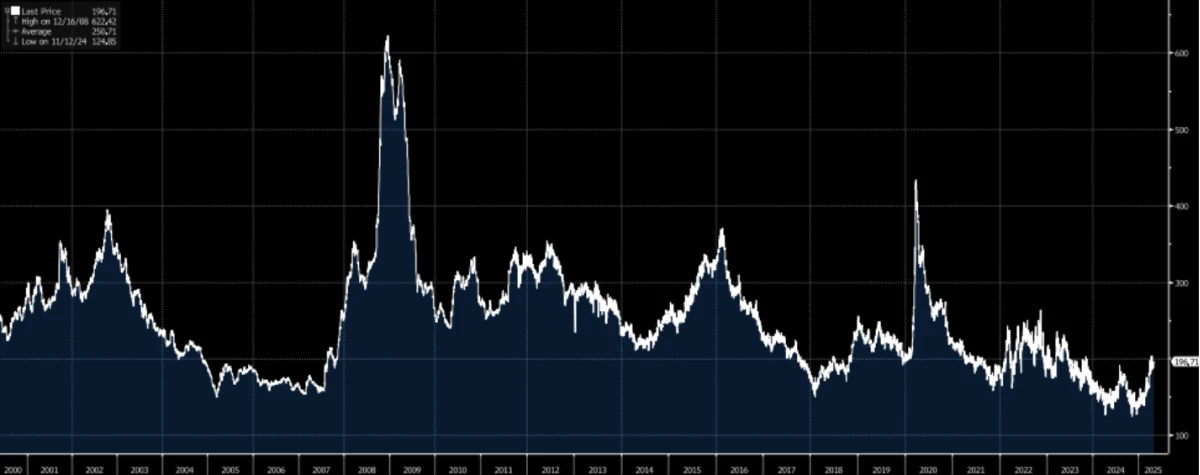
25-Year Chart of US Corporate BAA 10 Year Spread (as of 5/9/2025)
Source: Bloomberg
Tariffs and Trade
Trade policy has been the single biggest story for the economic and market outlook in 2025. Much of our previous assessment of the trade picture remains intact. In summary, the initial retaliatory tariff proposal presented by the Trump Administration on Liberation Day were not likely to be sustainable for a significant period of time. This suggested that the actual goal was to facilitate negotiations with an aim to reduce the United States’ trade deficit, bolster industries considered vital to national security and long-term growth, and reduce trade barriers abroad. The decision to pause the most severe (non-China related) tariffs on April 9th was a clear sign that negotiation was the desired outcome and a reduction from the highest tariff rates was on the horizon. In recent weeks, there have been further emerging signs of diplomacy aimed at defusing tensions.
The past week saw the most substantial progress towards clearing up the longer-term trade picture yet. On Thursday, the President along with members of his economic team and staff, unveiled a broad outline of a trade agreement with the U.K. It was the first deal by the United States with a country subject to the reciprocal tariff announcement. While many of the details remain unclear and nothing was signed in the event, U.K. Prime Minister Keir Starmer, who joined remotely, exhibited a mutual excitement over the agreement. From our perspective, the two most important takeaways from the announcement were that a blanket 10% tariff on U.K. imports will remain in place and that the construction and process of the deal itself may provide a template from which further trade deals can be made with other countries in the near future.
In the aftermath of the announcement, Commerce Secretary Howard Lutnick suggested on CNBC that additional economic deals would be arriving in the near future, stating “over the next month or so, we’re going to roll out dozens of deals”. While certainly a positive development, it’s important to note that the U.S.’s longstanding strong relationship with the U.K., disparity in economic leverage, and the U.S.’s operating at a trade goods surplus were already existing factors favoring a faster track for a trade deal between the two nations that are not collectively representative of many of the other countries in the negotiation process. Lutnick suggested further that negotiations with South Korea and Japan (which the U.S. operates with at large trade deficits) are more complex and will take more time. The EU is another economic group that likely fits this mold. However, momentum has been seen in trade negotiations with India.
Over the weekend, an additional potential breakthrough occurred with regards to the United States’ trade policy with China. Representatives on both side of the two largest economies in the world, including Treasury Secretary Scott Bessent, met in what was initially described to be an “ice breaker”. After a weekend of discussions, the two sides came to an agreement to enact deep cuts in current rates, with U.S. pausing their retaliatory tariffs for 90 days. The new 30% total tariff rate, which includes the 10% baseline rate on all countries and the additional 20% “fentanyl tariffs”, is well below the approximate 145% rate that had existed up to the weekend. China’s tariff rate on the U.S. meanwhile, was brought down to a low 10% rate. These developments are certainly significant, as exports from China to the U.S. under the 145% rate had all but fallen to zero with the exception of the most essential goods. The details of the pact are still uncertain, but representatives are likely to meet for a second round of talks aimed at a more comprehensive deal at an unspecified date in the next several weeks.
As it pertains to economic growth, the most important question is how much the final trade policy changes and current uncertainty will impact consumption. As mentioned in a previous update we sent, U.S. GDP grew by $29 trillion in 2024 while imports were a negative drag of $4.1 trillion. Exports accounted for a positive effect of $3.2 trillion. Combining exports with the negative impacts of imports gives one a net export detraction of $900 billion. Consumer spending by comparison made up 68% of 2024 GDP at $19.8 trillion. As a trade deficit-oriented economy, domestic consumption, private sector investment spending, and government spending are more impactful components to the overall growth trajectory of the country. However, given that the value chain of goods and services is global in nature, substantial changes to the prices, costs, and supply of both components and end products will certainly reverberate to the other drivers of GDP. These second order impacts will continue to warrant close monitoring.
The Economy
Perhaps the biggest headline for the U.S. economy in 2025 was the recent advanced reported figure for Q1 GDP. The figure, released on April 30th, showed a quarterly decline in growth of -0.3%; this was below analyst estimates of -0.2% and the previous quarter (Q4 GDP 2024 was 2.4%). While this negative number as a headline may have been alarming, a decline in GDP had been the consensus expectation, and when one looks at the components the results both make economic sense and paint the picture for a likely potential bounce back to positive figures in Q2.
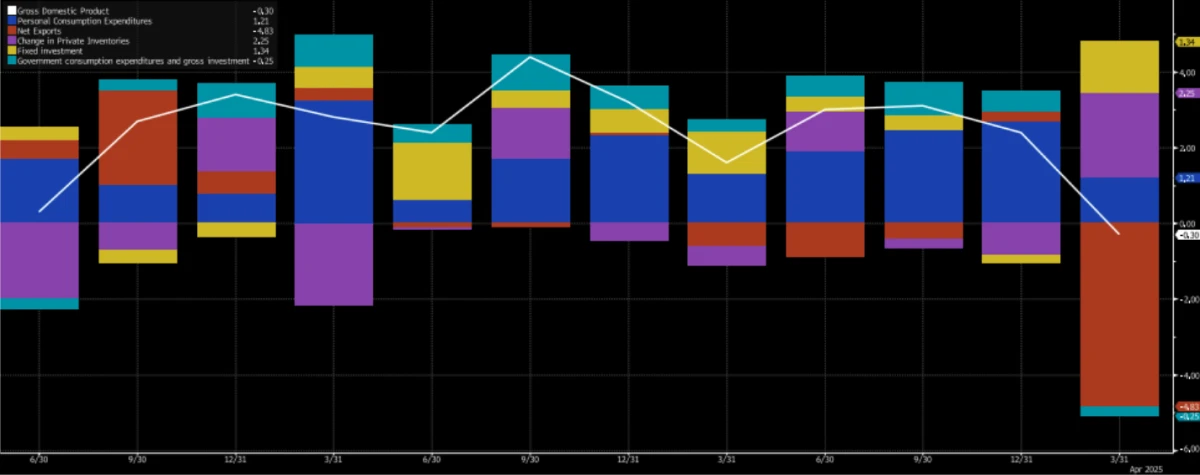
Quarterly GDP Components (as of Q1 Advanced Estimate)
Source: Bloomberg
As the graph above illustrates, Q1 saw an outsized impact to GDP from a jump in the negative impact of net exports (-4.83%). According to USImportData, the first quarter saw the U.S. import $1.89 trillion worth of goods and services, subtracting a total of -5.03% in percentage points from growth and equating to over 45% of the total dollar value of imports in 2024. Given the obvious economic incentive of an expectation in rising tariff costs, firms moved ahead of the tariffs to frontload their inventories in expectation of these policy changes. There is only so much import front-loading that companies can economically achieve, and our expectation is in-line with the consensus that these negative impacts should wane in their severity going forward.
Comparatively, the more stable and higher impact components of GDP mostly held up and exhibited positive growth for Q1. Personal consumption added 1.21%, business fixed investment added 1.34%, and changes in private inventories added 2.25%. The only other negative factor was the marginal detraction from government spending (-0.25%), attributable to budget cuts and federal layoffs. Given consumer spending’s high level of impact on overall economic growth, we believe continued strength in consumption should lead to overall economic resilience this year and a potential bounce back in GDP in subsequent quarters.
Maintaining our overall optimism in the U.S. consumer is the continued strength of the labor market. The first week of May’s payroll data (covering April) saw a second consecutive monthly beat in nonfarm payroll and private payroll expectations. Nonfarm payrolls showed 228k jobs added in April, an increase over the 151k jobs added in March. The unemployment rate after increasing to 4.2% in March (up from 4.1%) remained stable for April as well. In addition to this, JOLTS survey layoff rates have remained subdued, oscillating between 1% and 1.1% over the course of 2025. A tight labor market likely lends support for consumption spending to continue at healthy levels.
Inflation is the second pillar set to influence the sustainability of the consumer. The first sets of inflation data for April are set to be released on Tuesday, with the current consensus expectation to include a 0.3% increase in month-over-month CPI and year-over-year CPI rising 2.4%. In comparison, last month saw CPI data for March show surprise declines in monthly headline consumer and producer inflation. CPI fell -0.1% while PPI fell -0.4% over the month compared to economists’ estimates of 0.1% and 0.2% increases respectively. Contributing to the month’s decline in consumer prices was a combination of declines in energy prices and core inflation. CPI ex food and energy rose over March 0.1%, still below the consensus expectation of 0.3%. Aiding in the deceleration of core inflation has been a continuing year-to-date softening in shelter related inflation. US CPI Shelter’s contribution to month-over-month core inflation (~0.1%) has lessened since the end of January (~0.17%) and is well off the high of 2022 (~0.32%).
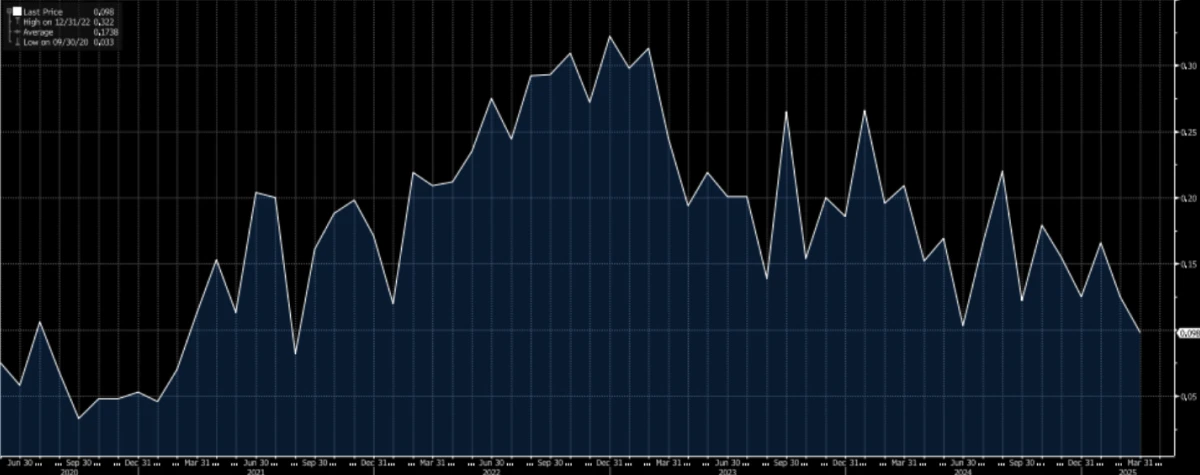
US CPI Rent of Shelter Contribution to Core Inflation- MoM (as of March)
Source: Bloomberg
It’s important to note that despite these constructive developments in the recent monthly inflation data, the Fed’s preferred inflation metric (Core PCE) remains above their target of 2%. March’s core PCE data reported a year-over-year inflation rate of 2.6%, a decrease from 2.8% in February and in-line with analyst expectations.
The Fed
Last week, in a move largely expected by markets, the Federal Reserve maintained the Federal Funds rate at a range of 4.25% to 4.50% for the third consecutive meeting. The central bank in its statement emphasized its continuing to take a cautious, data-driven approach amid heightened economic uncertainty. Chair Jerome Powell highlighted the dual risks of rising inflation and unemployment, largely attributed to recent tariff policies, which have introduced significant volatility into the economic outlook. Their patient stance reflects the Fed’s intent to navigate the complex trade-offs posed by current trade policies and their impact on inflation and growth.
While the chances of an interest rate cut by the July meeting fell per Fed Funds Futures markets, those same markets are now pricing in between 3 and 4 cuts by the end of 2025 versus just 2 to 3 cuts the day prior to the meeting.
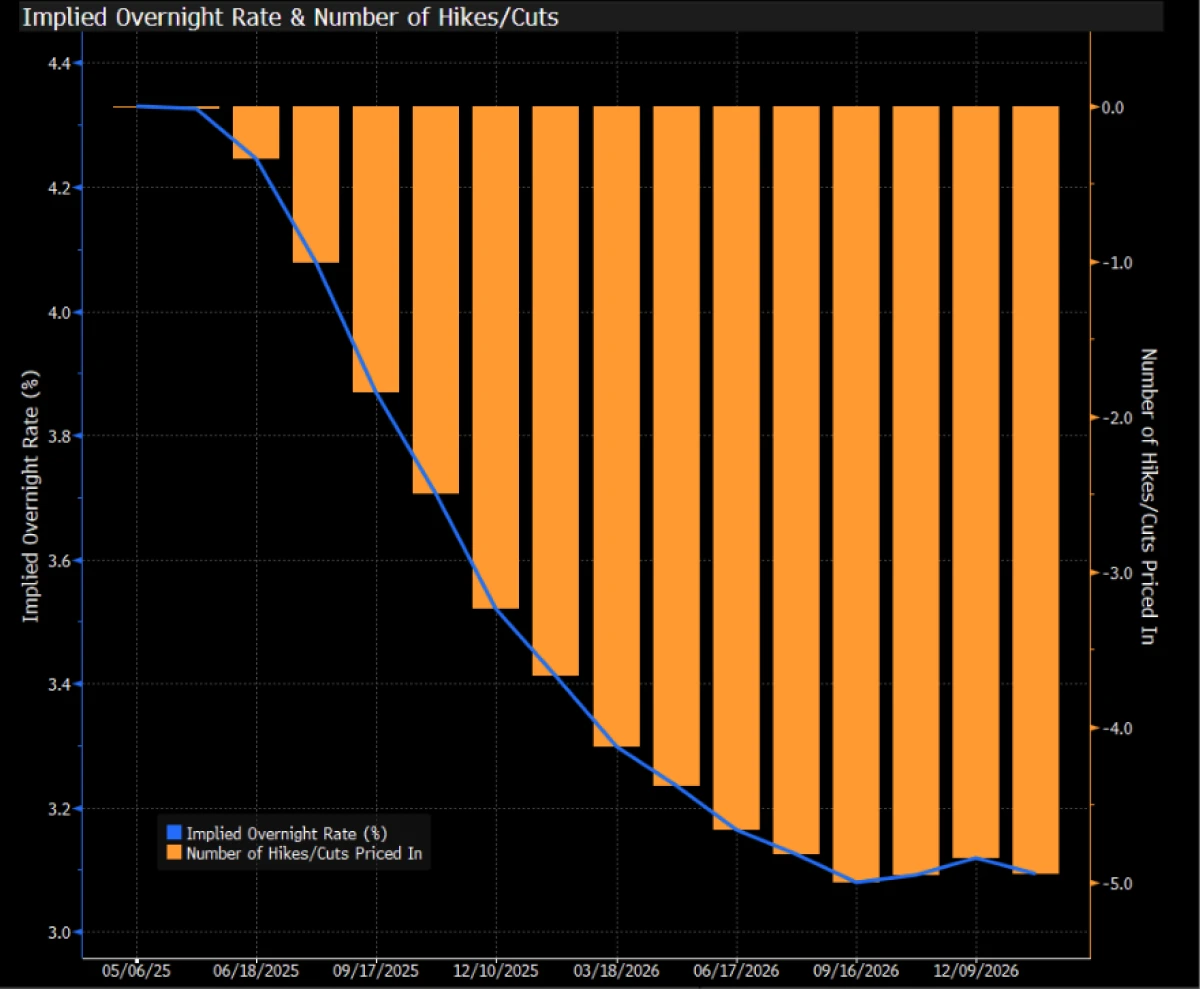
Implied Overnight Rate & Number of Hikes/Cuts (as of May 7th)
Source: Bloomberg
Chair Powell emphasized during the post-meeting press conference that “the economy itself is still in solid shape”. He also highlighted the swing in net exports having “affected the data” of the recent GDP report. The strong labor data the past two months has seemingly left the Fed room to continue to wait while inflation data has continued to cool but remained above their 2% mandate. While we do not anticipate a recession imminently on the horizon, the current level of interest rates leaves the central bank plenty of room to loosen monetary policy to stimulate the economy if necessary.
Earnings
With over 450 companies of the S&P 500 having reported their earnings for Q1, this most recent quarter’s earnings season is drawing near a close. Compared to analysts’ expectations, the results have been largely better than anticipated and have acted as an additional tailwind to the market’s recent rally. The S&P 500 has delivered positive earnings surprises of 8.32% while sales have been closer to expectations, surprising 0.75%. Absolute growth was also robust with the index’s constituents having grown earnings and sales by 12.3% and 4.2% respectively.
On a sector level, the biggest winners with respect to growth have been health care and communications services, which grew their earnings at 46.2% and 33.3% each. Utilities (13.2%), technology (13%), and the consumer discretionary sector (11.7%) each produced double-digit earnings growth as well. Materials (-14.4%), energy (-12.8%), consumer staples (-6.8%), and real estate (-0.9%) all experienced earnings declines. Communications services, with online advertising demonstrating high resiliency in the face of economic uncertainty, provided the biggest upside surprise to earnings at 24.3% above estimates.
Feedback and guidance on what to expect going forward from U.S. corporations on the tariff impact has been mixed. For instance, Snap Inc (SNAP) reported an upside surprise beat of 62.1% for Q1 earnings but pulled its guidance for the second quarter. Meta, after beating earnings expectations by 22.5%, indicated that digital advertising by Asian e-commerce companies (heavily impacted by adjustments to tariff policies) were reducing their spending on digital advertising. Manufacturers that rely on imported inputs like steel, aluminum, semiconductors, or machinery components have been among the hardest hit. For instance, industrial toolmaker Stanley Black & Decker explicitly cut its 2025 profit forecast, citing margin pressure and rising costs. The company has responded by raising prices (with one price hike in April and another planned later in the year) to offset the tariffs, and it is moving to reconfigure its supply chain.
While the recent trade policy related volatility has been pronounced, estimates for the year’s remaining quarters’ earnings have been adjusting accordingly as the graph below illustrates. Q1’s earnings expectations had fallen significantly in the lead-up to the recent season as well, but corporate profitability proved resilient in navigating that present environment. As the trade negotiations unfold through the coming weeks and months and clarity is brought to the economic environment perhaps a similar rebound can unfold.
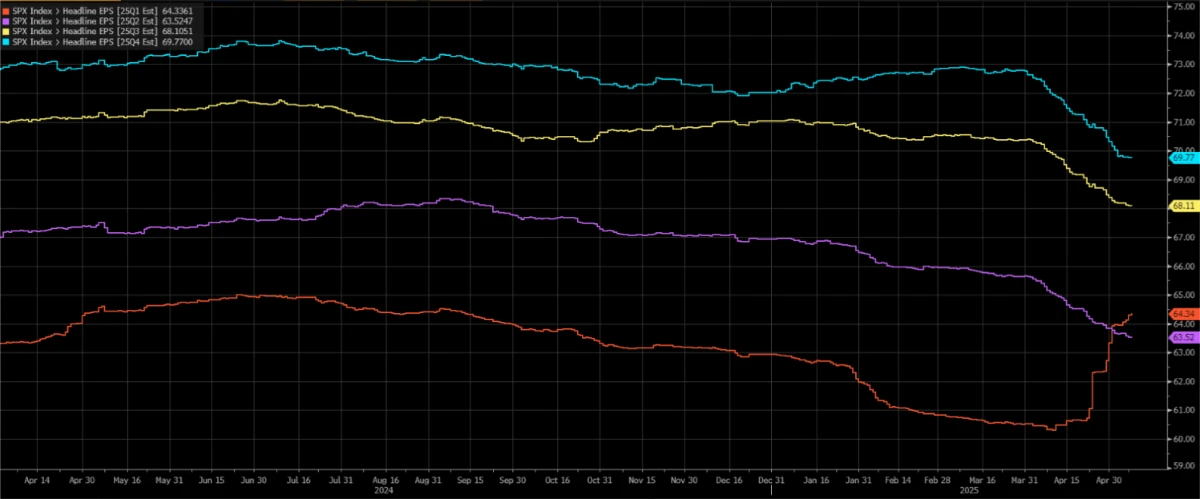
Analyst Quarterly EPS Expectations
Source: Bloomberg
Conclusion
We remain constructively optimistic about the path ahead, recognizing that recent market volatility, including April’s sharp pullback and partial recovery, is a normal and healthy part of long-term investing. History suggests that corrections often pave the way for future gains, with short-term volatility being the price we pay for future returns. Despite near-term headwinds in trade tensions and inflation concerns, we believe the long-term case for equities remains intact, driven by the strength of the U.S. economy, global innovation, and rising consumer demand. The resilience of equity markets in the face of past uncertainties reinforces our conviction that staying invested through turbulent periods is often rewarded as the table below shows from the recent history following market corrections.
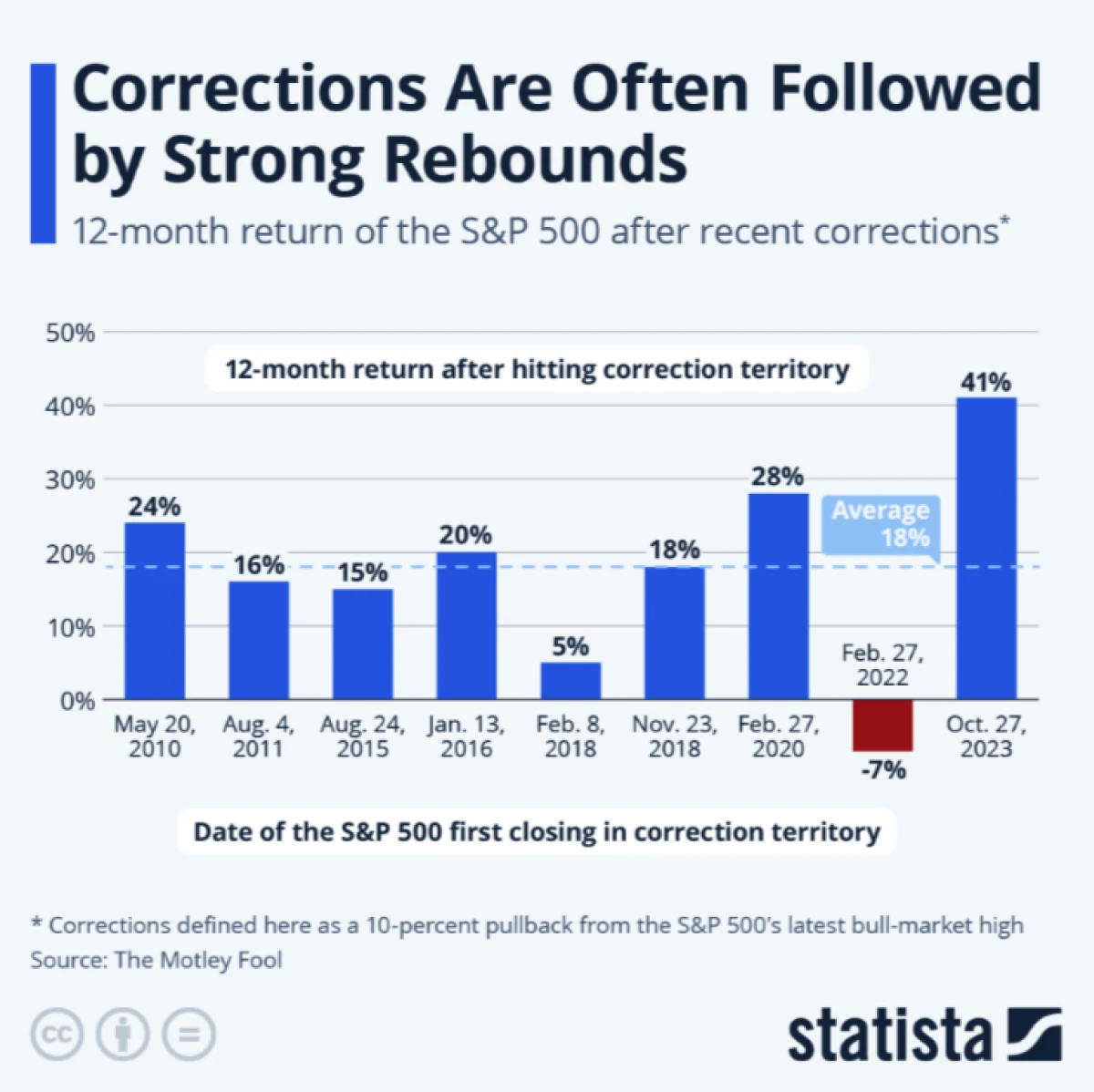
At the same time, maintaining a disciplined, diversified approach targeted towards one’s individual risk tolerance is essential.
Need Some Help?
If you’d like some help from one of our CPAs or CERTIFIED FINANCIAL PLANNER (CFP®) advisors regarding this strategy and how it applies to you, the Rhame & Gorrell Wealth Management team is here to help.
Our experienced Wealth Managers facilitate our entire suite of services including financial planning, investment management, tax optimization, estate planning, and more to our valued clients.
Feel free to contact us at (832) 789-1100, [email protected], or click the button below to schedule your complimentary consultation today.

IMPORTANT DISCLOSURES:
Corporate benefits may change at any point in time. Be sure to consult with human resources and review Summary Plan Description(s) before implementing any strategy discussed herein.Rhame & Gorrell Wealth Management, LLC (“RGWM”) is an SEC registered investment adviser with its principal place of business in the State of Texas. Registration as an investment adviser is not an endorsement by securities regulators and does not imply that RGWM has attained a certain level of skill, training, or ability. This material has been prepared for informational purposes only, and is not intended to provide, and should not be relied on for, tax, legal or accounting advice. You should consult your own CPA or tax professional before engaging in any transaction. The effectiveness of any of the strategies described will depend on your individual situation and should not be construed as personalized investment advice. Past performance may not be indicative of future results and does not guarantee future positive returns.
For additional information about RGWM, including fees and services, send for our Firm Disclosure Brochures as set forth on Form ADV Part 2A and Part 3 by contacting the Firm directly. You can also access our Firm Brochures at www.adviserinfo.sec.gov. Please read the disclosure brochures carefully before you invest or send money.